Fractional RF lifting for firmer, smoother skin. Now at La Vie Clinic.
Book
Biorevitalization vs Mesotherapy: The Difference and Which to Choose
Laser hair removal is a popular method of removing unwanted body hair. It has become even more common in the last few years.
The modern aesthetic landscape has undergone a profound philosophical shift. Where heavy-handed dermal fillers and frozen expressions once dominated, the contemporary focus has turned decisively toward skin architecture, cellular health, and luminous vitality.
Discerning patients increasingly seek subtle, regenerative interventions that restore the biological function of their tissues—treatments that make the skin look fundamentally healthier rather than fundamentally altered.
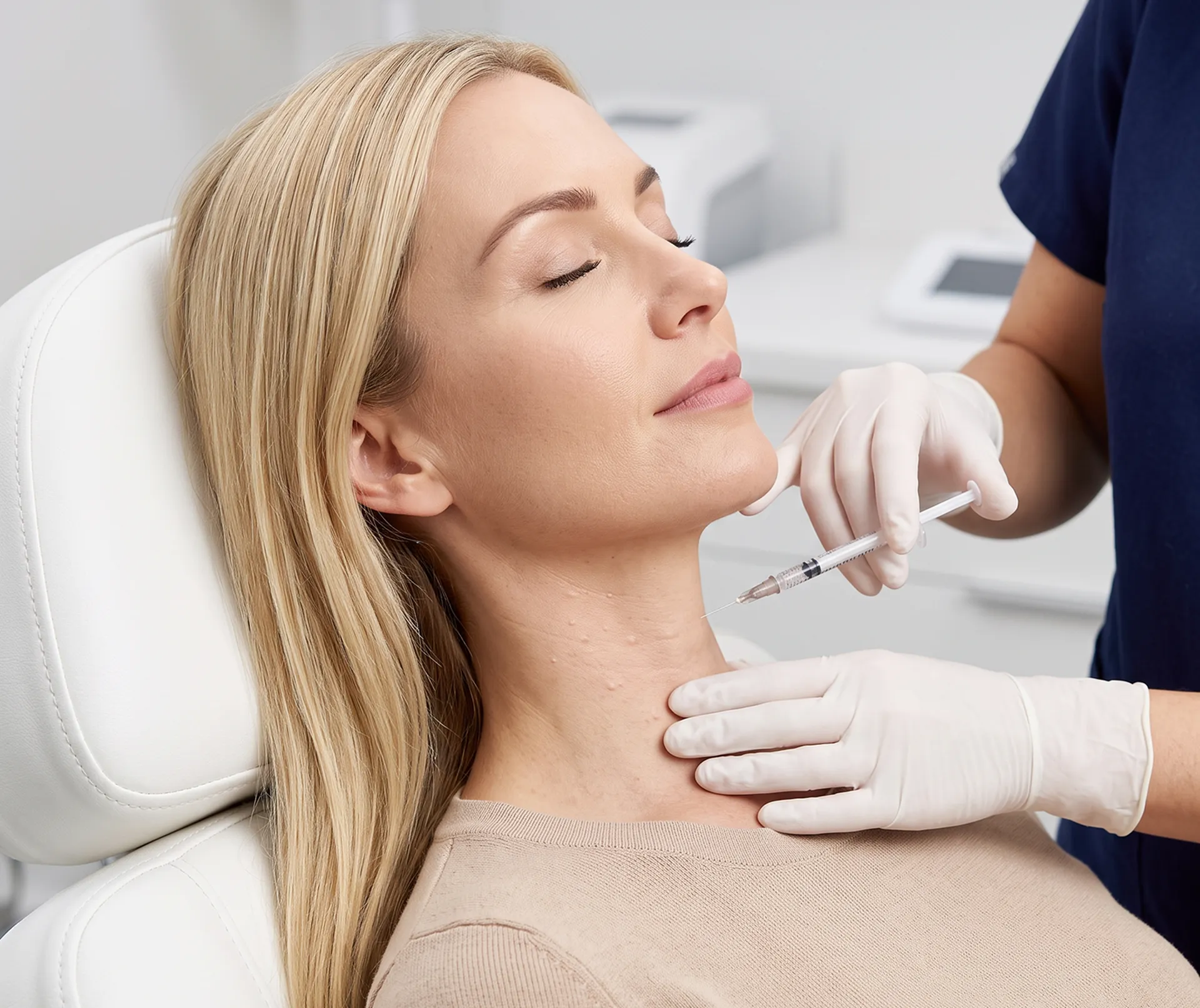
Within this realm of "injectable skincare", two procedures frequently command attention: mesotherapy and biorevitalization. Both harness the power of targeted micro-injections directly into the dermis, bypassing the superficial stratum corneum to deliver active compounds where topicals simply cannot reach.
"Are they merely two names for the same procedure, or do they address fundamentally distinct dermatological concerns?"
This clinical guide demystifies the biological mechanisms, formulations, treatment protocols, and targeted outcomes of both procedures, enabling you to select the precise therapy your skin requires.
Demystifying the Treatments: What Are They?
To appreciate their unique indications, one must first look beneath the surface to evaluate the underlying pharmacological principles of each technique.
Mesotherapy Unveiled
Conceived in France in the mid-twentieth century by Dr Michel Pistor, mesotherapy is an adaptable, bespoke micro-injection technique. Its purpose is straightforward: to bathe the mesoderm—the embryonic middle layer of tissue corresponding to the dermis—in a cocktail of regenerative micronutrients.
A traditional mesotherapy solution is essentially a targeted botanical and biochemical infusion. While it typically contains a baseline of non-crosslinked hyaluronic acid, this is generally present in a diluted concentration. The primary power of the formula lies in its accompanying therapeutic blend: essential amino acids, coenzymes, minerals, antioxidants, and plant extracts tailored to address dullness, oxidative stress, and superficial pigmentation.
Biorevitalization Explained
Biorevitalization represents a more modern, scientifically targeted evolution of dermal injection. While mesotherapy acts as a broad-spectrum multivitamin for the skin, biorevitalization is an intensive, biological reactivation of cellular machinery.
The cornerstone of biorevitalization is pure, high-molecular-weight, non-crosslinked hyaluronic acid, delivered at significantly higher concentrations. Rather than merely supplying nutrition, this concentrated hyaluronic acid interacts directly with CD44 cell surface receptors on dermal fibroblasts, triggering signaling pathways that stimulate the synthesis of native collagen, elastin, and endogenous hyaluronic acid.
The Core Differences: Formula, Depth, and Action
Understanding the functional boundaries between these therapies requires examining three defining parameters: formulation philosophy, injection depth, and clinical objective.
| Parameter | Mesotherapy | Biorevitalization |
|---|---|---|
| Formulation Philosophy | Nutrient-dense cocktail (vitamins, minerals, amino acids, low-density hyaluronic acid) | High-concentration, pure, non-crosslinked hyaluronic acid designed for bio-stimulation |
| Target Injection Depth | Superficial dermis (1.0 mm to 2.0 mm) | Mid-to-deep reticular dermis (2.0 to 4.0 mm) |
| Primary Mechanism | Metabolic support, micro-circulation boost, and cellular nourishment | Fibroblast receptor activation, deep structural hydration, and neo-collagenesis |
| Tissue Distribution | Localised diffusion of micro-droplets | Hydrophilic water-binding and active tissue integration across broader anatomical planes |
Formulation Philosophy
Mesotherapy adopts a holistic, "superfood" philosophy. It floods the skin with the precursors needed for metabolic function, compensating for micro-circulatory deficits and environmental degradation. In contrast, biorevitalization acts as a structural catalyst, re-establishing internal osmotic pressure to create optimal conditions for tissue self-repair.
Target Depth and Technique
Mesotherapy is delivered through rapid, superficial micro-punctures (often using the nappage technique) into the papillary dermis. These tiny droplets sit high within the skin, focusing on immediate dermal-epidermal communication.
Biorevitalization demands deliberate, deeper placement within the reticular dermis via papular, linear-threading, or bio-aesthetic point (BAP) protocols. Due to the high molecular weight and specific rheology of the gel, it disperses evenly through connective tissues, restoring dermal density from within.
Skin Improvements and Targeted Benefits
Because these treatments influence the skin via distinct biological pathways, their clinical outcomes differ substantially.
Ideal for skin compromised by urban pollution, chronic stress, or metabolic fatigue:
- Restoring Radiance: Swiftly revives dull, lacklustre, or "smoker’s skin" by promoting micro-capillary circulation.
- Refining Complexion: Formulations featuring vitamin C, glutathione, and tranexamic acid help even out tone and soften superficial pigmentation.
- Subtle Rejuvenation: Highly effective for delicate zones where heavier products might cause swelling, such as the peri-orbital area (minimising dark circles and fine dehydration lines).
The superior intervention when skin demonstrates architectural deterioration, severe moisture depletion, or loss of resilience:
- Tackling Deep Dehydration and Crepiness: Relieves persistent dryness that topicals cannot remedy, restoring a supple cushion to thinning skin.
- Restoring Dermal Firmness: Induces neo-collagenesis and remodels the extracellular matrix, improving elasticity and softening static lines.
- Modern Bio-Remodelling Synergy: Formulations such as Profhilo® H+L or Restylane® Skinboosters provide intensive structural support that subtly lifts and smooths mature, photo-damaged tissues across the face, neck, and décolletage.
Ideal Candidates: Who Should Choose Which?
Matching the correct therapy to physiological age and clinical presentation is essential for achieving an optimal aesthetic outcome.
The Ideal Candidate for Mesotherapy
Typically under 35, or experiencing situational skin exhaustion.
- Proactive, preventative skin care
- Persistent dullness or tired appearance
- Post-inflammatory marks or uneven tone
- Superficial oxidative damage
The Ideal Candidate for Biorevitalization
Typically 30 and above, showing visible cutaneous ageing.
- Marked skin elastosis and crepe-like thinning
- Static wrinkling and structural laxity
- Profound volume dryness following UV exposure
- Depleted internal hyaluronic acid reserves
Treatment Experience, Protocol, and Longevity
While both procedures are minimally invasive and performed using fine-gauge needles or micro-cannulas, their treatment timelines follow different cadences.
Session Cadence and Protocols
Mesotherapy: Relies on cumulative exposure as nutrients metabolise rapidly. A standard protocol involves 3 to 6 sessions spaced 2 to 3 weeks apart.
Biorevitalization: Requires a concentrated regimen due to the persistence of high-molecular-weight hyaluronic acid. A typical protocol consists of 2 to 3 sessions spaced 3 to 4 weeks apart.
Onset and Duration of Results
Mesotherapy: Rapid gratification within 48 to 72 hours. Results endure roughly 3 to 6 months, requiring quarterly maintenance.
Biorevitalization: Two-phase response. Immediate hydration within 14 days, followed by structural firming over 2 to 3 months. Endures 6 to 9+ months with biannual maintenance.
Safety Profile, Downtime, and Contraindications
Both procedures boast exemplary safety records when administered by a medically qualified aesthetic practitioner. Nevertheless, patients must understand the predictable post-treatment physical responses.
Post-Treatment Reality and Downtime
The most common side effect following biorevitalization is uniform, raised micro-papules at injection sites (resembling small bumps). These represent deposits of hyaluronic acid drawing in water, resolving completely within 24 to 48 hours.
Mesotherapy may present with mild, transient erythema and pinpoint micro-bruising, though visible papules dissipate quicker due to the lower viscosity. For both, patients may resume normal, non-strenuous daily activities immediately while avoiding heat, exercise, and makeup for the first 24 hours.
Absolute Contraindications
Neither treatment should be administered under the following circumstances:
- Active cutaneous infections, cold sores (Herpes Simplex), or inflammatory acne flare-ups
- Pregnancy or active breastfeeding
- Known hypersensitivity or allergy to hyaluronic acid or multivitamin complexes
- Bleeding diatheses or concurrent anti-coagulation therapy
- Uncontrolled autoimmune disorders or acute systemic illness
Making the Final Decision: The Expert Approach
Choosing between mesotherapy and biorevitalization should not be a matter of guesswork. To clarify your treatment pathway, consider where your primary aesthetic concerns lie:
- Choose Mesotherapy If your main priority is superficial glow, improved micro-circulation, targeted dark circles, or revitalising fatigued, urban-stressed skin.
- Choose Biorevitalization If your concerns center on structural firmness, crepey texture, fine lines, or deep, chronic dehydration that leaves the skin feeling thin and depleted.
Ultimately, skin is dynamic, and these modalities are not mutually exclusive. Many comprehensive aesthetic programmes pair them strategically—using biorevitalization to rebuild internal dermal resilience, followed by seasonal mesotherapy to enhance surface radiance.
Before booking any procedure, schedule an in-person clinical consultation with a qualified medical aesthetics doctor, clinical dermatologist, or aesthetic nurse prescriber. A thorough assessment of your skin thickness, dermal elasticity, and baseline hydration is the only reliable way to create a bespoke protocol that supports your skin's health for years to come.