
Wart Treatment for Kids: How to Remove Warts Safely
Laser hair removal is a popular method of removing unwanted body hair. It has become even more common in the last few years.
A Parent’s Guide to Childhood Warts
As a parent, discovering an unusual bump on your child’s hand or the sole of their foot often triggers a wave of concern. Let us begin by dispelling the most persistent myth: warts are not a sign of poor cleanliness.
"In the world of paediatric dermatology, we view warts almost as a rite of passage. They are an incredibly common part of growing up, affecting approximately one in five children at some point during their school years."
While these small skin growths can be stubborn and occasionally unsightly, they are almost always harmless. However, because they are caused by a virus, they require a patient, strategic approach to management. This guide is designed to help you navigate the journey from initial discovery to successful clearance.
Recognising Common and Plantar Warts
Warts are benign (non-cancerous) skin growths caused by the Human Papillomavirus (HPV). This virus thrives in warm, moist environments and enters the skin through tiny nicks or scratches.
Common Warts
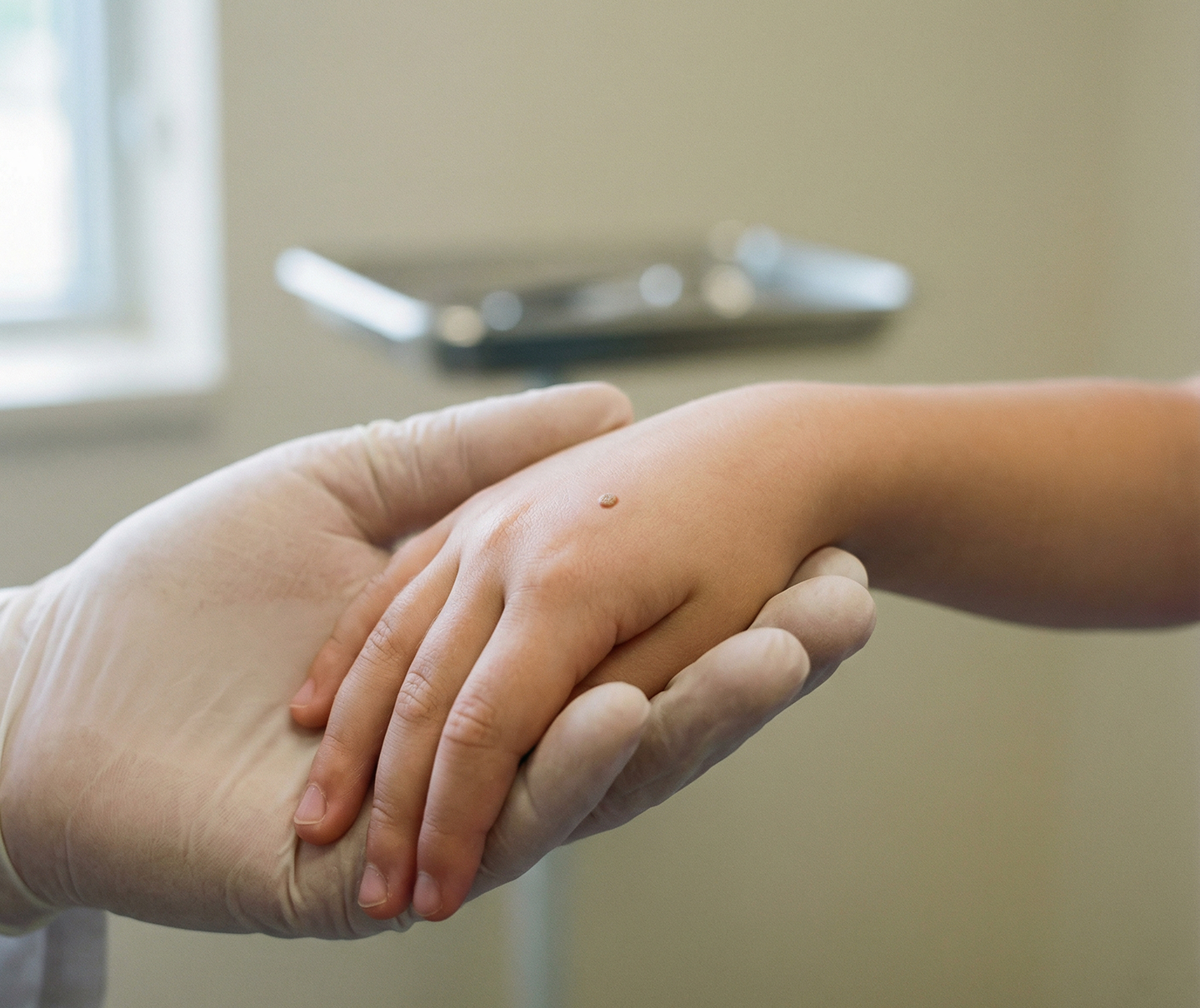
Typically appear on fingers, backs of hands, and around nails. They have a rough, grainy appearance and a rounded top. You may see tiny black dots (clotted blood vessels) often called "seeds."
Plantar Warts (Verrucas)
Occur on the soles of the feet. Because of walking pressure, they grow inward. They may feel like a small stone in the shoe and can cause discomfort during physical activity.
Gentle Home Care and Prevention
Many warts disappear on their own, but if the wart is causing distress, home management is a sensible first step. Consistency is key.
Warm water soak: Soak the area for 5–10 minutes to soften the keratin.
Filing: Use a pumice stone or disposable emery board to gently file away the dead surface skin. Note: Never share these tools or use them on healthy skin.
- Discourage biting nails or picking at warts.
- Wear flip-flops or waterproof socks in communal pools/showers.
- Do not share towels, flannels, or socks within the household.
Apply salicylic acid only to the wart. Protect healthy skin with a ring of petroleum jelly. This treatment often requires daily application for 12 weeks or more.
When to Seek Medical Advice
| Situation | Why see a Specialist? |
|---|---|
| Significant Pain | If a plantar wart affects your child's gait or sports performance. |
| Rapid Spreading | If warts appear on the face, genitals, or multiply quickly. |
| Signs of Infection | Redness, warmth, pus, or red streaks originating from the site. |
| Persistent Growth | Home treatments show no improvement after 3 months of consistent use. |
Advanced Clinical Treatments
Cryotherapy
Liquid nitrogen freezes the wart, creating a blister that eventually peels away. Best for older or less anxious children.
Immunotherapy
A yeast extract (Candida antigen) is injected to alert the immune system to the HPV virus, clearing warts naturally.
Laser Treatment
A focused light beam cauterises the blood vessels feeding the wart, causing it to die and fall off.
Pre-Appointment Checklist
Being prepared helps your specialist focus on the best treatment plan:
-
The HistoryNote when the wart first appeared and how it has changed.
-
Previous AttemptsList all OTC medicines or home remedies used and for how long.
-
Current MedicationsInclude prescription drugs, vitamins, and supplements.
-
Questions to AskAsk about recovery times, scarring risks, and activity restrictions.
Final Thoughts for Parents
Dealing with childhood warts requires a blend of patience and persistence. Reassure your child that their skin will clear. By framing treatment as a "team effort," you can turn a frustrating condition into a lesson in health maintenance and resilience. Soon enough, these little bumps will be nothing more than a distant memory.