
Mesotherapy for Hair and Scalp: Does It Work and What Are the Risks?
Laser hair removal is a popular method of removing unwanted body hair. It has become even more common in the last few years.
For millions experiencing the distressing onset of progressive hair thinning, navigating modern trichology can feel bewildering. Between the rigorous daily commitment demanded by pharmaceutical topicals and the surgical finality of follicular unit extraction, a substantial gap exists.
Over the past decade, scalp mesotherapy has surged into this space, heralded across aesthetic clinics as a non-surgical saviour for sluggish follicles. Yet behind the glossy marketing promises of needle-induced rejuvenation lies a nuanced clinical reality. While mesotherapy represents a sophisticated method of targeted drug delivery, it is neither a panacea nor a universal substitute for comprehensive medical management. To determine whether this therapeutic approach warrants investment, patients must look beyond aesthetic hyperbole and interrogate the physiological mechanisms, empirical evidence, and clinical parameters that govern its success.
The Biological Rationale: Direct Intradermal Bio-Stimulation
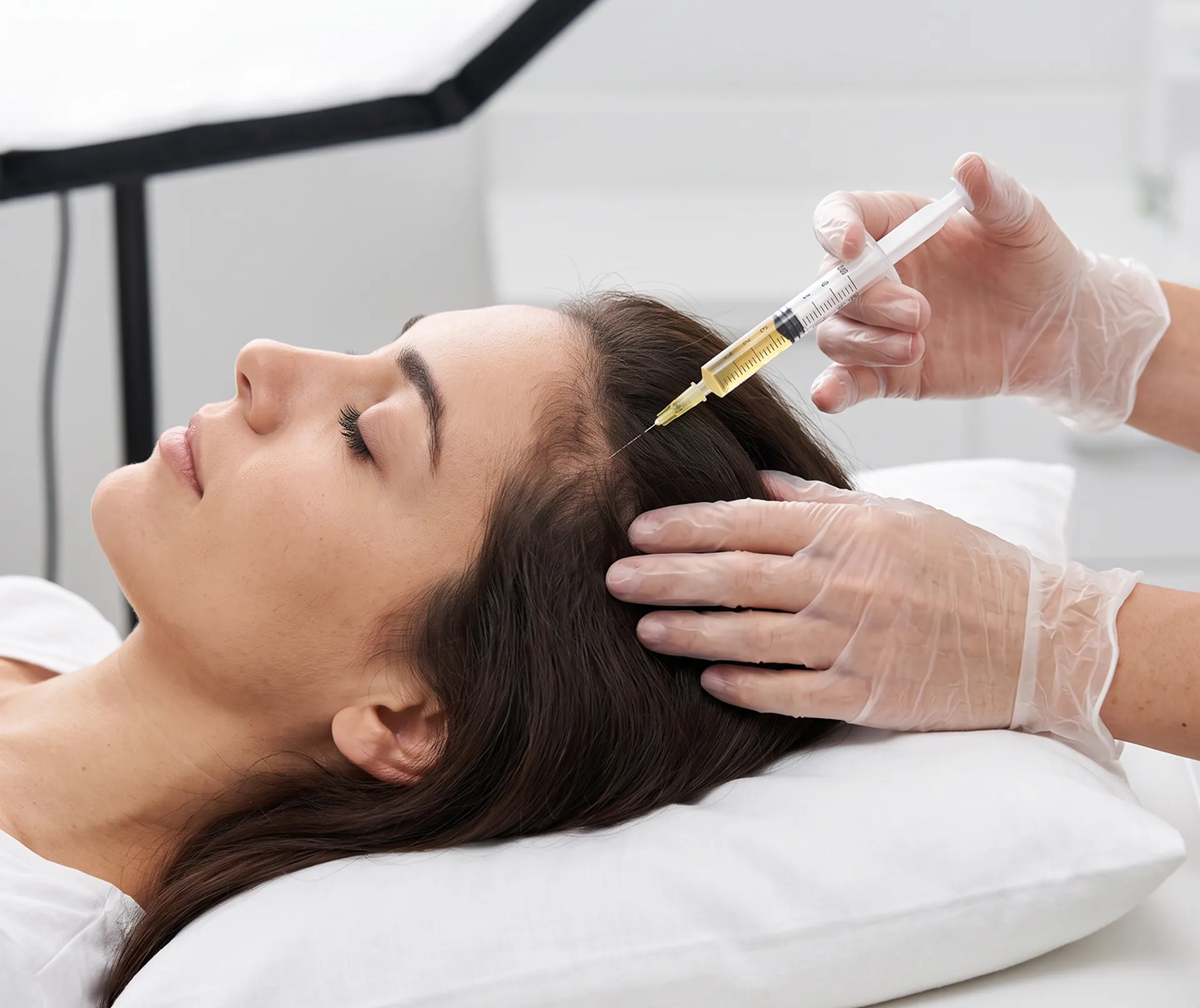
Scalp mesotherapy is an outpatient procedure that employs superficial micro-injections to deposit concentrated active solutions—often termed "micro-aliquots"—directly into the scalp’s dermal layer (the mesoderm), roughly 1 to 4 millimetres beneath the skin's surface.
Mechanical Micro-Trauma
- Micro-punctures activate wound-healing cascade
- Upregulates local microcirculation
- Stimulates collagen synthesis and cellular turnover
Active Pharmacological Cocktails
- Peptides (Biotinyl-GHK, Copper Peptides)
- Growth factors (VEGF, IGF-1)
- Low-dose pharmaceuticals (Minoxidil, Dutasteride)
- Essential micronutrients and amino acids
This anatomical targeting addresses two fundamental hurdles in medical trichology:
- Overcoming the Stratum Corneum: The epidermis functions as an exceptionally proficient hydrophobic barrier. Most topical lotions, foams, and serums struggle with poor percutaneous absorption, often oxidising or evaporating before sufficient molecules can reach the target hair follicle bulge and dermal papilla.
- Mitigating Systemic Exposure: Systemically administered oral medications undergo first-pass hepatic metabolism and distribute throughout the entire body, occasionally precipitating unwanted systemic side effects. Intradermal mesotherapy seeks to localise pharmacologically active agents precisely where they are needed, maintaining high tissue concentrations while curbing systemic bio-availability.
The Cocktail Formula
The injected solutions vary widely across clinical practices. Traditional mesotherapy formulas relied heavily on bespoke blends of micronutrients: B-complex vitamins (notably biotin, dexpanthenol, and niacin), trace minerals (such as zinc and organic silicium), and foundational amino acids (including arginine, cystine, and methionine) designed to nourish cellular metabolism.
Contemporary medical protocols have evolved toward targeted biological and pharmaceutical actives:
Biomimetic Peptides
Synthetic signal sequences (e.g., Biotinyl-GHK, Copper Tripeptide-1) engineered to prolong the anagen growth phase and downregulate local inflammatory cytokines.
Cellular Growth Factors
Recombinant VEGF and IGF-1, working to encourage perifollicular angiogenesis and active cellular proliferation.
Intradermal Pharmaceuticals
Off-label micro-doses of minoxidil or 5-alpha reductase inhibitors (dutasteride), deposited directly to halt hormone-mediated miniaturisation.
This targeted pharmacological delivery is paired with mechanical micro-trauma. The puncturing action of the needle creates controlled micro-wounds that activate the body's natural healing cascade. This stimulates localized platelet degranulation, promotes neo-angiogenesis, and spurs extracellular matrix remodelling, reinforcing the physiological vascular network supplying each follicular unit.
Clinical Efficacy: Separating Evidence from Marketing
The critical clinical question remains: does intradermal infiltration translate to measurable changes in hair calibre and density?
The scientific literature surrounding scalp mesotherapy is nuanced. While decades of clinical practice and numerous observational studies confirm positive biological responses, large-scale, double-blind, randomised, placebo-controlled trials remain limited. This is compounded by a fundamental lack of procedural standardisation. Because one clinic may inject a simple vitamin-and-hyaluronic-acid complex while another administers an evidence-backed cocktail of dutasteride and bio-peptides, establishing uniform outcome measures across published trials presents an ongoing challenge.
- Early-stage androgenetic alopecia
- Active telogen effluvium
- Reversible follicular dormancy
Result: Follicles respond well. Significant improvements in calibre and density can be achieved.
- Completely smooth, atrophic scalp
- Late-stage, end-phase baldness
- Primary cicatricial (scarring) alopecia
Result: Absent follicular tissue. Mesotherapy is ineffective; surgery or acceptance is required.
The clinical consensus among evidence-led trichologists is clear: mesotherapy demonstrates marked utility in addressing follicular miniaturisation, the progressive biological thinning seen in early-to-moderate androgenetic alopecia (pattern hair loss) and diffuse telogen effluvium.
In these circumstances, the dormant or miniaturising follicle remains physiologically viable. Delivering micro-nutrients, vasodilators, and anti-androgens directly to the dermal papilla can arrest miniaturisation, prolong anagen duration, and reverse hair shaft atrophy.
Conversely, mesotherapy cannot regenerate hair within completely bald, fibrotic, or scarred scalp tissue. When a follicular ostium has atrophied completely and undergone fibroplasia, no amount of localized bio-stimulation can reconstruct an absent dermal papilla. Presenting mesotherapy as an alternative to surgical restoration for advanced baldness is clinically inaccurate.
Mesotherapy vs Established Alternatives
| Modality | Primary Mechanism | Clinical Delivery & Frequency | Main Advantages | Primary Limitations |
|---|---|---|---|---|
| Scalp Mesotherapy | Localised intradermal delivery of bio-cocktails & micro-trauma | In-clinic micro-injections; courses of 4–8 sessions, then quarterly maintenance | High local tissue concentrations; minimises systemic drug exposure | Operator-dependent results; requires ongoing maintenance; temporary discomfort |
| Platelet-Rich Plasma (PRP) | Autologous growth factors concentrated from the patient's own blood | Venepuncture, centrifugation, and scalp re-injection; every 4–6 weeks initially | 100% biocompatible autologous tissue; zero risk of synthetic allergic response | Highly variable platelet yields per patient; more labour-intensive and uncomfortable |
| Topical Minoxidil | Potassium channel opener; upregulates microcirculation | Self-administered topical application once or twice daily | Non-invasive; long-standing clinical trial pedigree; affordable | Daily compliance burden; risk of vehicle-induced contact dermatitis; low rate of absorption |
| Oral 5-ARIs (Finasteride / Dutasteride) | Systemic inhibition of 5-alpha reductase, drastically lowering serum DHT | Single daily oral tablet | Gold-standard efficacy for stabilizing genetic hair loss across the entire scalp | Potential systemic side effects; requires strict daily adherence |
Increasingly, trichologists favour combination therapy over monotherapy. For instance, pairing low-dose systemic 5-alpha reductase inhibition with targeted mesotherapy courses provides dual-action intervention: systemic mitigation of follicular DHT attack, reinforced by localised intradermal delivery of peptides and vascular stimulants to promote robust hair shaft calibre.
The In-Clinic Experience and Expected Timeline
Consultation & Prep
Anaesthesia / Ice
Intradermal Injections
Antiseptic Wipe & Home
A standard mesotherapy appointment lasts roughly 30 to 45 minutes. Following skin antisepsis, the practitioner delivers active solutions via either manual multi-puncture technique (using ultra-fine 30G to 32G hypodermic needles) or an automated mesotherapy injection gun calibrated to precise depths. Discomfort is generally mild to moderate, often described as a repetitive prickling sensation. Depending on clinical preference, topical lidocaine anaesthetic creams or localized cryo-rollers can be used to blunt cutaneous sensitivity.
The Loading Phase
Typically consists of 4 to 8 sessions spaced at weekly or fortnightly intervals. This establishes sustained tissue saturation and repeated micro-trauma signalling.
The Maintenance Phase
Once clinical stabilization is verified, treatments transition to maintenance intervals, generally administered once every 2 to 3 months to prevent genetic signals from resuming miniaturisation.
Non-responders do exist. If no measurable stabilization or textural improvement occurs by month four of a structured protocol, continuing the identical formulation is rarely clinically justified.
Candidacy, Risks, and Safety Red Flags
Careful patient selection is paramount. Establishing clear candidacy boundaries protects patients from spending resources on therapies unlikely to yield meaningful results.
Ideal Candidates
- Men and women with early-stage, active androgenetic alopecia (Norwood II–IV; Ludwig I–II).
- Individuals experiencing persistent, non-scarring telogen effluvium triggered by systemic illness, metabolic shock, or stress.
- Patients seeking supportive medical care following a hair transplant to condition non-transplanted native follicles.
- Patients intolerant of oral pharmaceuticals or seeking adjunctive care.
Unsuitable Candidates
- Individuals with long-standing, end-stage baldness featuring atrophic, shiny scalp skin devoid of viable openings.
- Patients suffering from active primary cicatricial (scarring) alopecias (Lichen Planopilaris, Frontal Fibrosing Alopecia, CCCA), where micro-trauma may exacerbate inflammation.
- Those unwilling or unable to commit to regular long-term maintenance sessions.
Potential Side Effects and Safety Profile
When performed by a qualified medical professional under strict aseptic conditions, scalp mesotherapy maintains an excellent safety profile. Typical transient side effects include:
- Localised erythema, pinpoint bleeding, and mild scalp tenderness lasting 24 to 48 hours.
- Minor cutaneous oedema or transient, mild tension cephalalgia (headache) following extensive injection patterns.
- Occasional small haematomas (bruising) at injection sites.
Severe complications remain rare, though they underline the importance of regulated clinical settings. Non-sterile environments can introduce secondary bacterial or atypical mycobacterial infections, leading to inflammatory micro-abscesses and secondary scarring. Additionally, unregulated, poorly prepared formulations carrying unverified ingredients significantly heighten the risk of allergic contact dermatitis and localised tissue necrosis.
Absolute Contraindications
Treatment must always be administered by a registered, medically licensed professional—such as a dermatologist, trichologist, or cosmetic doctor—rather than unregulated aesthetic practitioners working without clinical governance.
The Holistic Scalp Ecosystem: Looking Beneath the Surface
While direct intradermal delivery provides targeted biological stimulation, the scalp remains an extension of the body’s broader internal ecosystem. Micro-injections cannot overcome the effects of unaddressed, systemic disruptions.
Before embarking on any course of mesotherapy, patients should undergo a thorough clinical workup. A comprehensive trichological consultation should assess:
"Approached with realistic expectations, scalp mesotherapy can be a valuable tool within modern trichology. It bridges the gap between passive topicals and invasive surgery, stabilizing shedding and restoring density to miniaturising follicles."
To achieve lasting improvements, however, patients should treat it as part of a wider therapeutic programme: preceded by thorough diagnostic evaluations, tailored to the individual's specific hair-loss biology, and overseen by a qualified medical practitioner.