
Plinest vs Nucleofill vs Newest vs Rejuran: How Polynucleotide Brands Differ
Laser hair removal is a popular method of removing unwanted body hair. It has become even more common in the last few years.
In regenerative aesthetics, DNA-based injectables have transformed skin rejuvenation. Rather than simply filling hollows or temporarily paralyzing dynamic lines, polynucleotide skin treatment promotes true tissue regeneration.
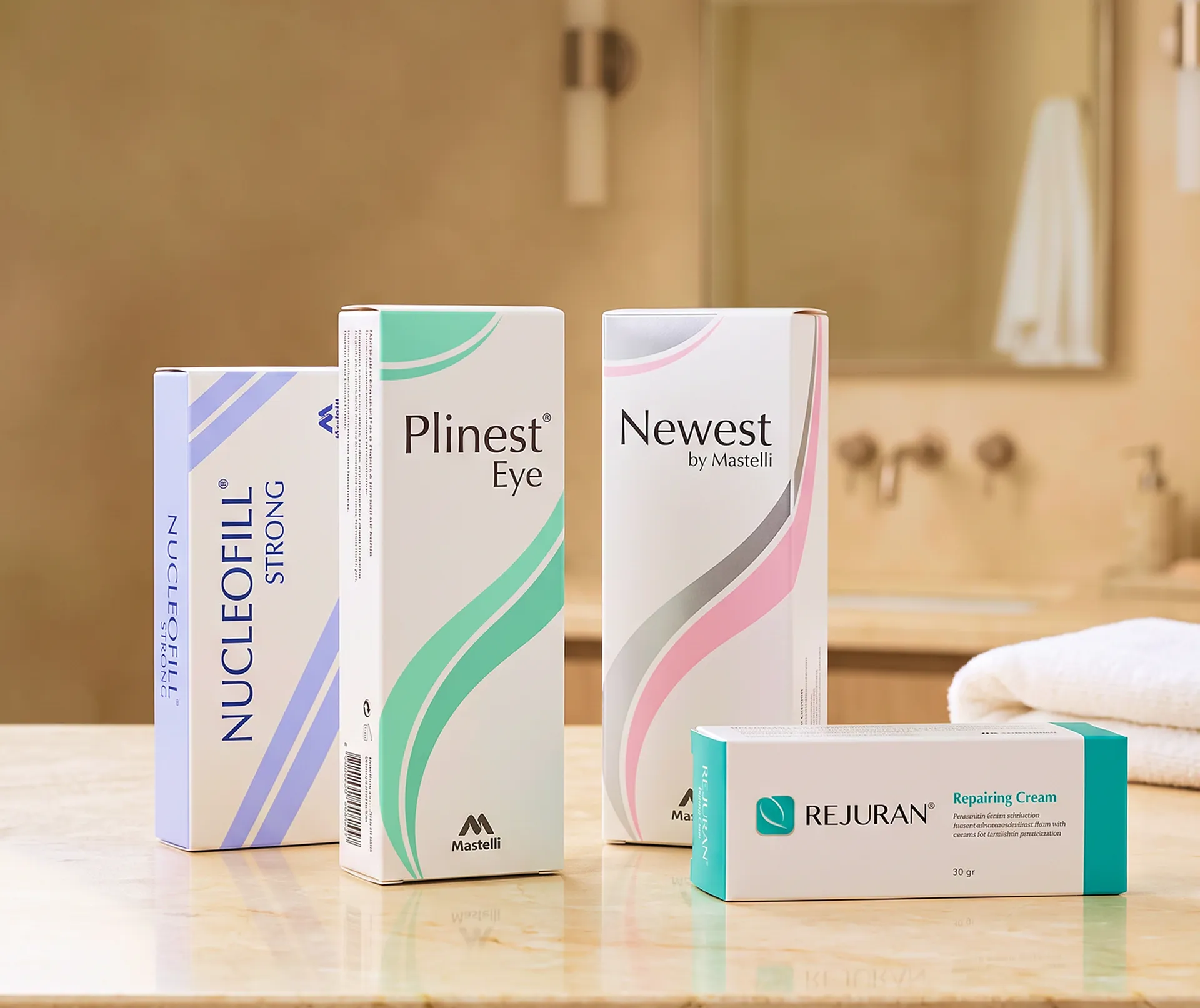
Four primary brand families lead this therapeutic category: Plinest and Newest (developed by Mastelli in Italy), Rejuran (manufactured by PharmaResearch Products in South Korea), and Nucleofill (from Promoitalia in Europe). While all operate on similar regenerative principles, differences in their source fish, molecular weight, product thickness, formulation, and rheology dictate how each brand performs across clinical indications.
PDRN vs. Polynucleotides: Understanding the Classification
To compare these products, it is first necessary to clarify the difference between PDRN (polydeoxyribonucleotide) and polynucleotides (PN). Both are DNA-based polymers extracted from salmonid sperm cells, but they represent different fragment sizes:
PDRN (Polydeoxyribonucleotide)
Consists of shorter DNA fractions, usually defined between 50 and 1,500 base pairs, with a molecular weight under 500 kDa. It was originally developed as an approved tissue-repair drug to accelerate diabetic wound healing and manage chronic ulcers.
Polynucleotides (PN)
Chains are significantly longer, containing higher molecular weight polymers (often between 1,000 and 1,500 kDa). These form three-dimensional, viscoelastic polymeric gels that trigger cellular signaling pathways while binding water molecules to provide immediate hydration and scaffold support.
Both variants act through cellular salvage pathways and are completely metabolized by the body into base purines, pyrimidines, and water, leaving behind zero foreign residue. Clinical data demonstrate that both formats offer secondary benefits, including pigment reduction through an anti-melanin effect, while functioning as an advanced biostimulant treatment.
How Polynucleotide Therapy Works: Skin-Repair Biology
Polynucleotide therapy targets foundational skin-repair biology. When introduced into the dermis via an intradermal micro-injection or a multi-point mesotherapy technique, PN molecules trigger a cascade of regenerative processes:
A2A Adenosine Receptor Activation
Initiates an anti-inflammation cascade, downregulating pro-inflammatory cytokines (such as TNF-α and IL-6) while promoting tissue-healing phenotypes.
Fibroblast Proliferation & Remodeling
Encourages direct fibroblast proliferation, stimulating the synthesis of de novo extracellular matrix components, specifically type I collagen and elastin renewal.
Angiogenesis & Microcirculation
Stimulates vascular endothelial growth factor (VEGF), spurring micro-vessel formation to restore local microcirculation, oxygenation, and nutrient delivery.
Follicular Support
In scalp tissue, increased perfusion and cellular stimulation promote hair follicle renewal, reversing miniaturization in androgenetic alopecia.
Mechanism of Action Flow
Key Differences Between Polynucleotide Brands
While the foundational biological mechanism is shared, distinct extraction processes, molecular structures, and brand portfolios differentiate each product line.
| Brand | Manufacturer | Source Fish | Primary Portfolio Variants |
|---|---|---|---|
| Plinest | Mastelli (Italy) | Trout DNA | Classic, Eyes, Hair, Hydro, Smart Skin |
| Newest | Mastelli (Italy) | Trout DNA | Combined PN + HA |
| Rejuran | PharmaResearch (South Korea) | Salmon DNA | Healer, I, S, HB |
| Nucleofill | Promoitalia (Europe) | Salmon DNA | Soft, Medium, Strong |
Mastelli pioneered Italian PN research, isolating polynucleotides from trout DNA sourced from certified freshwater aquaculture. Using its patented purified polynucleotide technology (HPT – Highly Purified Technology), the lab ensures optimal purification quality, stripping protein traces to minimize foreign-body reactions.
- Plinest Classic: 20 mg/ml (40 mg/2ml) of HPT-PN for mid-to-deep dermal remodeling, targeting rough texture, moderate solar elastosis, and neck wrinkles.
- Plinest Eyes: Low-viscosity formula (7.5 mg/ml) engineered for the delicate periorbital zone, reducing dark circles, under-eye crepiness, and fine wrinkles without fluid retention.
- Plinest Hair: Targeted at scalp revitalisation and hair follicle renewal.
- Plinest Hydro: A lighter formulation designed as an introductory polynucleotide skin booster.
- Plinest Smart Skin: Curated to reinforce general cellular health in younger demographic cohorts.
Newest couples Mastelli’s HPT polynucleotides (10 mg/ml) with non-crosslinked hyaluronic acid (10 mg/ml). This hybrid formulation provides a dual action: polynucleotides deliver long-term dermal remodeling, while hyaluronic acid supplies immediate extracellular hydration and turgor.
It is particularly effective for dehydrated, photo-damaged skin requiring both structural signaling and rapid moisture binding.
Manufactured in South Korea using wild-caught chum salmon DNA, Rejuran uses proprietary DOT™ (DNA Optimizing Technology) to produce high-purity PN fractions. Supported by extensive PubMed-indexed studies across Asian demographics, Rejuran is widely recognized for barrier repair, redness reduction, and texture smoothing.
- Rejuran Healer: The core full-face product (20 mg/ml of PN), injected via superficial intradermal blebs to repair barrier integrity and smooth crepey skin.
- Rejuran I: A thinner, more fluid formulation created specifically to treat delicate periocular lines and thin lower-eyelid skin.
- Rejuran S: The highest-viscosity option in the lineup, designed with concentrated structure to anchor under depressed acne scars and surgical marks.
- Rejuran HB: A hybrid blend of PN and non-crosslinked HA, supplemented with lidocaine to lower injection discomfort while providing deep dermal hydration.
Nucleofill utilizes European-sourced salmon DNA and is formulated in distinct rheological grades. Rather than relying solely on superficial mesotherapy blebs, Nucleofill's high molecular weight and viscoelasticity allow it to be placed at structural bio-aesthetic points (BAP technique) to target mild soft-tissue laxity:
- Nucleofill Soft (Eyes): Lower-density PN (15 mg/ml) designed to treat periorbital hollowing, congestion, and fine lines.
- Nucleofill Medium: Moderate-density PN (20 mg/ml) suited for initial signs of aging, mid-face dullness, and early superficial sagging.
- Nucleofill Strong: A high-viscosity biostimulator (25 mg/ml) designed for thicker skin, deep folds, deep-plane ligament support, and jawline definition.
Combining Polynucleotides with Other Aesthetic Protocols
Polynucleotides integrate well into multi-modal rejuvenation protocols. Because PN operates biologically by reducing inflammation and repairing micro-architecture, it works synergistically with energy-based devices (EBDs) and topical biologies.
Ultherapy & HIFU
Ultrasound targets deep SMAS structural laxity. Infiltrating the overlying dermis with PN two weeks later supplies the micro-environment that fibroblasts require to synthesize new collagen, optimizing total lifting outcomes.
Post-Laser & RF Microneedling
Fractionated ablative lasers and radiofrequency devices create controlled thermal zones. Applying or injecting PN during recovery limits protracted erythema, shortens downtime, and supports structured dermal matrices.
"Repair & Glow" Approaches
Combining an exosome facial or superficial HA infusions with deeper PN injections provides immediate epidermal radiance alongside deep structural dermal healing.
Safety, Suitability, and Contraindications
Polynucleotide gels show a favorable safety profile across all Fitzpatrick photo-types. Because PN stimulates cellular pathways without directly targeting melanogenesis, it carries a minimal pigment risk (post-inflammatory hyperpigmentation) on deeper, melanin-rich Morena skin. This makes it a dependable choice for treating acne scars and skin texture where heat-based lasers might carry hyperpigmentation risks.
Key Contraindications:
- Fish or Salmon Allergy: True anaphylactic or severe hypersensitivity to seafood or salmon products requires strict avoidance.
- Active Skin Infections: Any active bacterial, viral (such as herpes simplex), or fungal outbreak within the treatment zone contraindicates treatment.
- Active Acne Flare-ups: Injections should not be administered directly into cystic acne or active pustules mid-breakout to prevent spreading bacteria.
- Pregnancy or Breastfeeding: Consistent with aesthetic standards, PN should not be administered to patients who are pregnant or nursing due to an absence of direct safety data.
Choosing the Right Brand for Your Skin
Selecting the appropriate product depends on three clinical variables: individual skin quality, the anatomical treatment area, and the desired structural outcome.
Periorbital / Fine Skin
- Plinest Eyes: Low-viscosity periorbital refinement
- Rejuran I: Delicate periocular fluid repair
- Nucleofill Soft: Periorbital hollowing and lines
Mid-face / Lower Face / Scarring
- Nucleofill Strong: Moderate laxity & ligament support
- Rejuran S: Deep and atrophic acne scars
- Newest / Rejuran HB: Dehydrated, photo-aged skin
- Rejuran Healer / Plinest Classic: Thin, reddened skin barrier repair
- For thin, hyper-reactive, reddened skin: Rejuran Healer and Plinest Classic excel at rebuilding damaged skin barriers and resolving cutaneous inflammation.
- For periorbital concerns: Plinest Eyes, Nucleofill Soft, or Rejuran I provide targeted treatment for thin eyelids with a low risk of swelling.
- For structural laxity requiring mechanical support: Nucleofill Strong delivers higher cohesion and viscosity, lifting tissues across anatomical tension lines.
- For dry, photo-damaged skin needing immediate plumping: Newest or Rejuran HB combine polynucleotides with non-crosslinked hyaluronic acid for combined repair and hydration.
- For depressed scars: Rejuran S offers the localized structural support needed to elevate atrophic fibrotic scars.