
Does Microneedling Hurt and What Does the Procedure Feel Like?
Laser hair removal is a popular method of removing unwanted body hair. It has become even more common in the last few years.
The prospect of rolling or stamping dozens of miniature needles into the face is enough to give even the most ardent skincare enthusiast pause. If needle anxiety has kept you from exploring collagen induction therapy, you are far from alone. The central question lingering in the minds of prospective clients is almost always straightforward: does microneedling actually hurt?
The short, reassuring answer is that for the vast majority of people, microneedling causes minimal discomfort rather than genuine pain. On a standard pain scale of one to ten, most individuals rate the sensation somewhere between a two and a four. Rather than feeling sharp or piercing, the experience is often described as an unusual, vibrating tickle paired with the rough texture of a cat’s tongue or light scratching.
Understanding what occurs during a session, how clinical devices operate, and why certain facial zones react differently can transform pre-treatment apprehension into calm anticipation.
The Science of the Sensation
To understand why microneedling is far gentler than it sounds, it helps to look at the mechanics behind it. Microneedling is an advanced, non-surgical skin rejuvenation procedure designed to improve skin texture, soften fine lines, and fade stubborn scars.
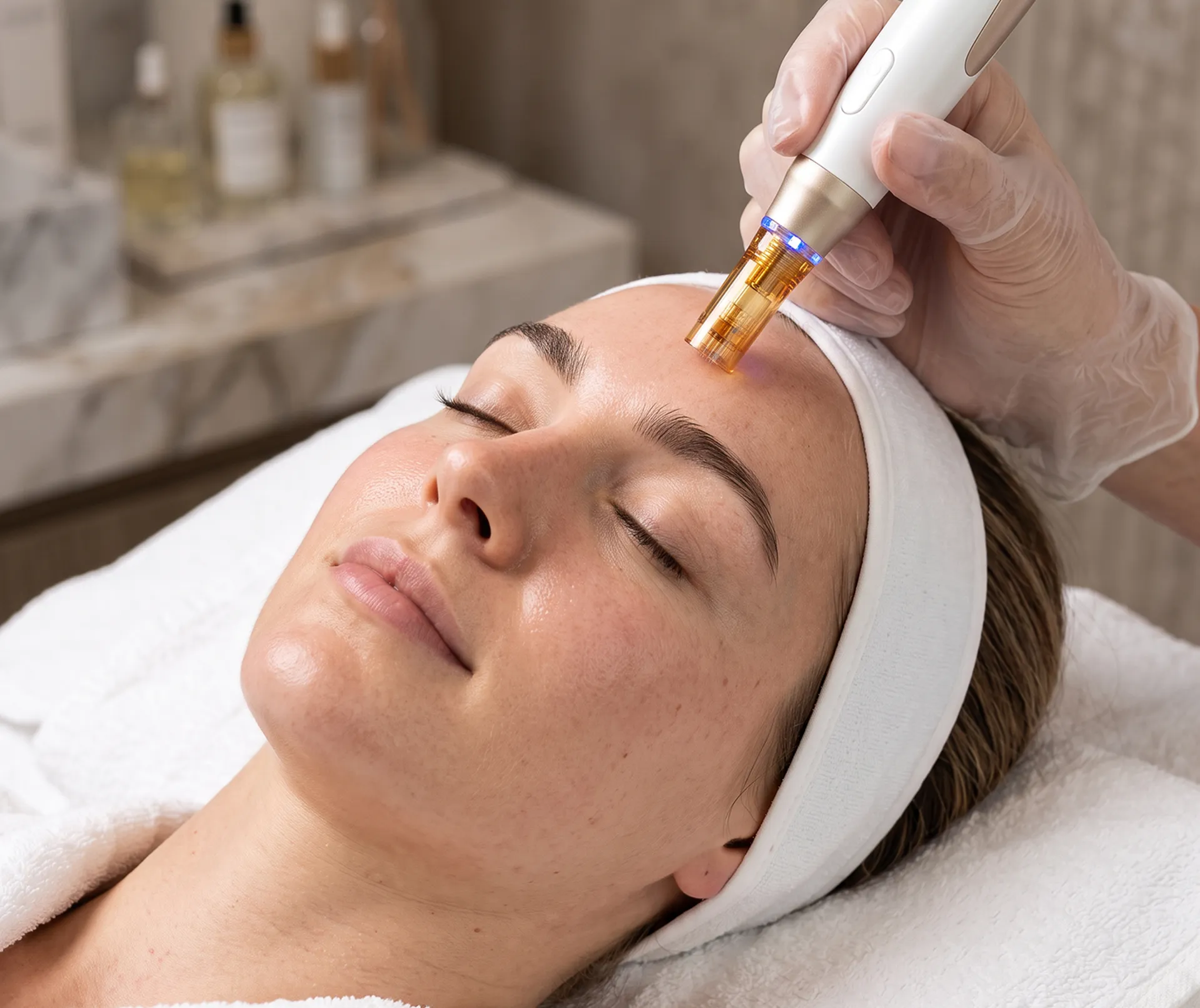
Using a specialised device equipped with sterile needles—such as the medical-grade SkinPen® precision device—a trained practitioner glides ultrafine needles across the upper layers of skin. These micro-punctures create controlled micro-injuries.
Because these needles puncture vertically at an extraordinary velocity, they do not tear the tissue. Instead, they produce clean, microscopic channels that bypass the deeper nerve networks while triggering the body’s innate wound-healing cycle.
It is this biological response that stimulates fresh collagen and elastin production, all without inflicting genuine trauma on the skin.
Preparation and the Power of the Numbing Cream
Nobody is expected to face a clinical microneedling device with unprotected skin. The cornerstone of a comfortable treatment lies in thoughtful pre-treatment skincare and the application of an effective topical anaesthetic.
Before the device touches your face, your practitioner will conduct a thorough skin assessment and cleanse the skin to establish a sterile surface. Following this, a thick layer of medical-grade topical numbing cream is applied to the treatment area.
The Sensory Journey: What You Feel During the Session
Once the numbing cream has worked its magic and is removed, the practitioner applies a hydrating slip serum—typically hyaluronic acid—to ensure the device glides effortlessly without friction.
When the motor starts, you will hear a faint, electric buzzing sound. As the device moves systematically across your face, the primary sensation is one of rapid vibration coupled with firm, rhythmic pressure.
Clients frequently describe the feeling in three distinct ways:
Sandpaper Texture
A rough, sandpaper-like texture being swept steadily and evenly over the skin surface.
Vibrating Prickle
The distinctive, prickly sensation of an electric toothbrush head pressed gently against the face.
Light Grazing
A light scratching or grazing feeling that transitions swiftly from one section to another.
The speed of the microneedling device is so rapid that individual needle entries are impossible to discern. Your aesthetician will continuously adjust the needle depth depending on the specific area being treated, ensuring optimal results while keeping your comfort firmly intact.
Facial Geography: Why Sensitivity Varies by Zone
Pain is subjective, but facial anatomy dictates that some zones are naturally more sensitive than others. The amount of cushioning tissue beneath the skin plays a significant role in what you feel.
Putting the Discomfort in Perspective
To contextualise the sensation, it helps to compare microneedling to other well-known aesthetic and personal care treatments.
| Treatment | Primary Sensation | Comparison to Microneedling |
|---|---|---|
| Tattooing | Deep, continuous piercing into dermal layers | A tattoo uses larger needles operating for hours; microneedling uses ultrafine needles for fractions of a second and is substantially less painful. |
| RF Microneedling | Mechanical prickle combined with deep thermal heat | RF delivers heat energy into the channels, introducing an internal snap and higher heat intensity than traditional microneedling. |
| Laser Resurfacing | Repeated hot snap akin to a flicking rubber band | Lasers produce a distinct hot burning sensation during passes, whereas traditional microneedling involves zero thermal heat. |
Post-Treatment Sensations and the Healing Cycle
The procedure itself takes only 20 to 30 minutes, but what happens when the numbing agent begins to wear off?
Immediately post-procedure, your skin will look flushed—ranging from a light pink to a moderate, rosy redness—and will feel warm, tight, and plump. Most clients compare the sensation to a mild sunburn. This slight sensitivity and radiant warmth usually peak over the first few hours before gradually dissipating over the next 24 to 48 hours.
Supporting your skin through its healing process requires adherence to simple aftercare instructions:
1. Cleanse Gently
Wash only with tepid water and gentle cleansers; avoid active ingredients such as retinoids, AHAs, and vitamin C for at least three to five days.
2. Hydrate Diligently
Combat transitional dryness and light flaking with plain, fragrance-free skincare products focused on barrier support.
3. Shield from UV Rays
Avoid direct sun exposure entirely for the first 48 hours. Thereafter, apply a broad-spectrum SPF daily to protect the fresh tissue.
The Verdict: A Minor Sensation for Major Radiance
While microneedling is not entirely imperceptible, the discomfort is remarkably brief, completely manageable, and heavily mediated by professional numbing techniques.
When measured against the outcome—a visible reduction in scarring, smoothed fine lines, and long-lasting rejuvenation—the momentary sensation of light scratching is a small, worthwhile investment in your skin's health. With an experienced practitioner tailoring the treatment to your individual skin type and aesthetic goals, you can comfortably sit back and let your skin's natural regeneration take centre stage.