
Biorevitalization Explained Simply: What It Is and What It Does
Laser hair removal is a popular method of removing unwanted body hair. It has become even more common in the last few years.
We have been conditioned to believe that great skin is built at the bathroom vanity. We layer humectant-rich essences, smooth on clinical-grade serums, and seal our complexions with lipid-dense creams, hoping these formulations will penetrate deep enough to turn back the biological clock.
Yet, there is an inescapable physiological reality: the human epidermis is an exceptional barrier. Its primary evolutionary role is not to drink in expensive topicals, but to keep the outside world out.
While high-performance skincare protects and conditions the outermost mantle, the true engine room of skin vitality—the dermis—sits largely untouched below. Here, deep within this living matrix, structural proteins weaken, microcirculation slows, and natural reservoirs of moisture dwindle with age.
When your complexion begins to look perpetually fatigued, crepey, or lacking in its youthful, light-reflective bounce, no amount of topical intervention can wholly rectify the deficit.
Enter biorevitalization: a sophisticated, non-surgical therapy that bypasses the epidermal barrier entirely. Rather than masking age or artificially sculpting contours, this regenerative aesthetic treatment wakes up cellular functions from the inside out.
To understand why it has become the quiet gold standard among discerning dermatologists and aesthetic practitioners throughout the United Kingdom and Europe, we must look past the buzzwords and examine the biology beneath.
Deconstructing the Term: Life, Restored to the Dermis
To understand biorevitalization, one must first look at its etymology. Derived from the Greek bios (life) and the Latin revitalis (to restore vitality), the procedure translates quite literally to the biological restoration of living tissue.
In modern regenerative aesthetic medicine, biorevitalization refers to an evidence-based, minimally invasive technique designed to awaken sluggish cellular metabolism. It is not an exercise in artificial alteration; it is an act of biological resuscitation.
Biorevitalization at a Glance
Etymology: "Bios" (Life) + "Revitalis" (Restoration of Vitality)
Core Philosophy: Cellular Awakening → Biocompatible Nutrients → Endogenous Tissue Renewal
The Triad of Excellence:
- • Non-Crosslinked Hyaluronic Acid: Instant intercellular hydration and water reservoir creation.
- • Amino Acid Precursors: Essential building blocks for natural neocollagenesis.
- • Micronutrient Engine: Targeted vitamins and coenzymes neutralising oxidative stress.
For decades, the dominant cultural narrative around aesthetic injectables focused heavily on structural alteration: freezing facial movement or inflating lost volume. Biorevitalization sits in an entirely different therapeutic category.
It does not change your facial architecture, nor does it inhibit your natural expressions. Instead, it systematically rebuilds the biological environment that skin cells require to function as they did years earlier.
By introducing an exquisitely calibrated blend of native nutrients directly into the dermis, biorevitalization creates an optimal physiological habitat. It is the clinical difference between painting over dry wood and deeply conditioning the grain to restore its natural suppleness.
The Crucial Distinctions: Dermal Fillers, Mesotherapy, and Biorevitalization
Because aesthetic terminology can easily become blurred in marketing campaigns, patients frequently conflate biorevitalization with other injectable modalities. Untangling these differences is essential for choosing the right approach for your skin goals.
| Modality | Primary Active Agent | Clinical Objective |
|---|---|---|
| Traditional Dermal Fillers | Cross-linked, high-viscosity Hyaluronic Acid | Mechanical volumising, structural contouring, and deep projection |
| Classic Mesotherapy | Dilute, highly fluid multivitamin and mineral cocktails | Surface micro-nutrition and light superficial skin glow |
| Biorevitalization | Concentrated, non-crosslinked Hyaluronic Acid + Amino Acids | Deep dermal hydration, fibroblast activation, and tissue regeneration |
Biorevitalization versus Traditional Dermal Fillers
The fundamental divergence here lies in chemical structure and clinical intent:
Traditional Dermal Fillers: These rely on hyaluronic acid that has been chemically modified via cross-linking agents (such as BDDE). This cross-linking binds the molecules into a cohesive, long-lasting gel. The primary purpose is mechanical: to project cheekbones, define jawlines, soften deep folds, or restore lost volume. The product holds its shape beneath the skin for nine to eighteen months, functioning as a physical scaffold.
Biorevitalization: Uses pure, non-crosslinked hyaluronic acid in a fluid, biocompatible state. Because it lacks synthetic cross-links, it does not mould, sculpt, or add artificial bulk. It disperses evenly across the dermal bed, acting as an active biological trigger rather than an inert structural implant.
Where fillers create physical projection, biorevitalization cultivates tissue quality, elasticity, and light-reflective hydration.
Biorevitalization versus Classic Mesotherapy
While biorevitalization evolved from the foundational principles of French mesotherapy, the two treatments differ significantly in concentration, depth, and clinical power:
Classic Mesotherapy: Involves superficial micro-injections of highly diluted cocktails composed of plant extracts, vitamins, trace minerals, and low-concentration hyaluronic acid. Its primary target is the upper dermis and epidermis, making it an excellent maintenance treatment for surface luminosity.
Biorevitalization: Employs significantly higher concentrations of high-molecular-weight, pharmaceutical-grade hyaluronic acid. It is placed deliberately into the mid-to-deep reticular dermis, precisely where structural collapse begins.
Mesotherapy offers light, transient nourishment to the skin's surface. Biorevitalization initiates a structural remodelling programme within the deeper architecture of the skin.
The Cellular Engine: How the Process Works Inside the Skin
To appreciate the impact of biorevitalization, we must look at what happens at the cellular level during and immediately after a session.
The skin's mid-layer—the dermis—is an intricate extracellular matrix (ECM) made up of collagen, elastin, and glycosaminoglycans, all immersed in a water-rich gel. The architects of this matrix are specialized cells called fibroblasts.
During youth, fibroblasts churn out abundant structural proteins, keeping skin firm, dense, and bouncy. With advancing age, cumulative ultraviolet exposure, and lifestyle stressors, fibroblasts slow down. They flatten, enter senescence, and produce less collagen, while enzymes like matrix metalloproteinases steadily break down the matrix around them.
Biorevitalization reverses this downward spiral through two complementary biological actions: precise mechanical stimulation and targeted metabolic fuel.
1. Controlled Physical Signalling
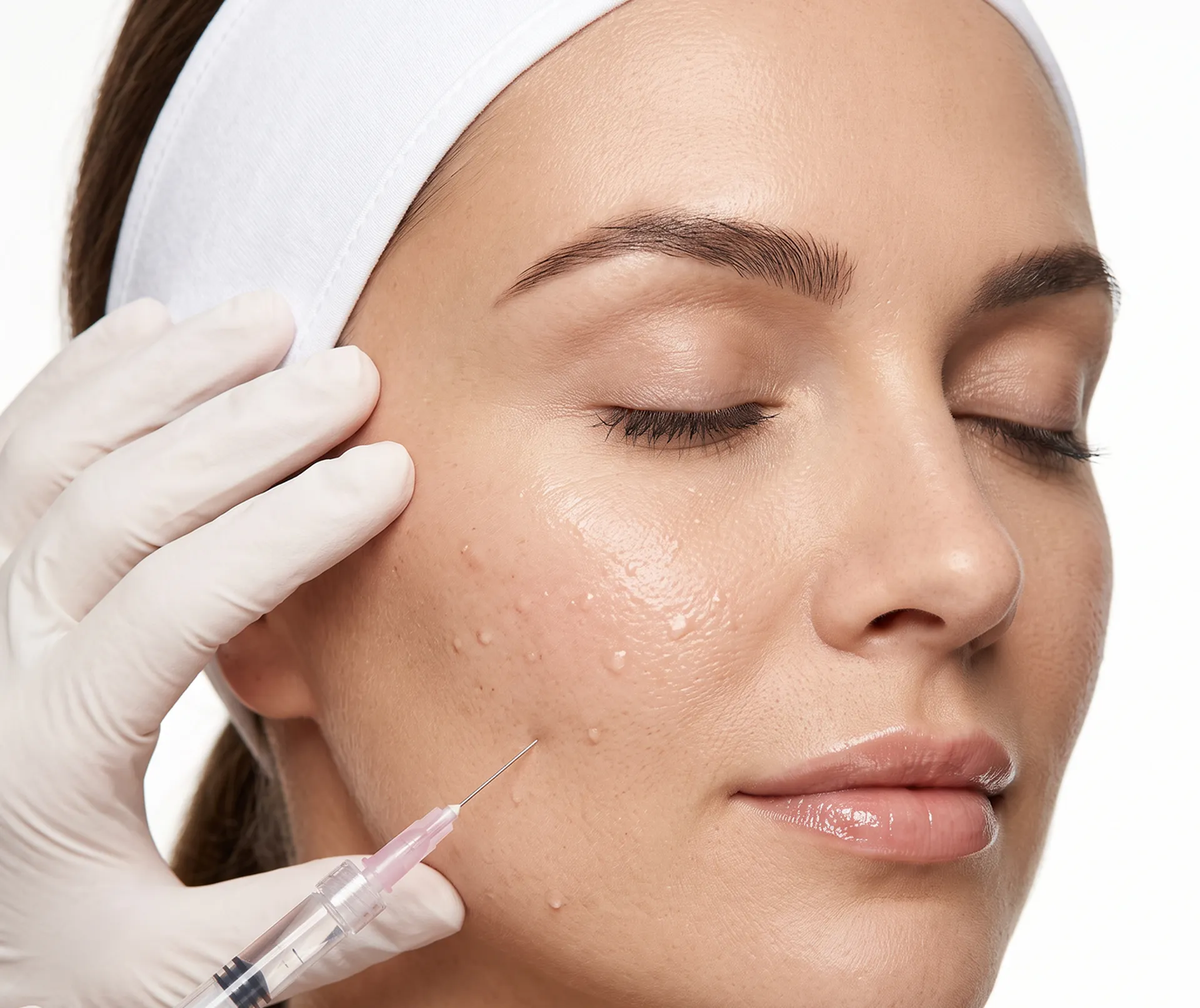
The practitioner deposits micro-droplets of product across the dermal bed using ultra-fine needles. This controlled micro-trauma triggers a microscopic healing cascade.
The physical insertion, combined with the hydro-pressure of the deposited droplet, stretches and activates mechanoreceptors on dormant fibroblasts, signalling them to switch back into active repair mode.
2. Receptor-Mediated Activation
Non-crosslinked hyaluronic acid binds directly to specific cell receptors (CD44 and RHAMM).
This biochemical interaction commands the fibroblast nucleus to ramp up production of Type I and Type III collagen, generate flexible elastin fibres, and synthesise endogenous hyaluronic acid.
The Powerhouse Composition
A premium biorevitalization formula delivers an orchestrated blend of revitalising compounds directly where skin needs them most:
Non-Crosslinked Hyaluronic Acid
Holds up to 1,000 times its molecular weight in water. Deposited into the dermis, it acts as an immediate reservoir, restoring fluid pressure and hydrating parched upper layers.
Essential Amino Acids
Includes Glycine, Proline, Lysine, and Leucine—the vital raw materials needed to construct the triple-helix collagen chain alongside active fibroblast stimulation.
Antioxidant Vitamins
Vitamins A, C, E, and B-complex act as enzymatic cofactors for collagen assembly, prevent lipid peroxidation, and support cellular energy cycles against free radicals.
Coenzymes and Trace Minerals
Zinc and Copper accelerate healing pathways, facilitate enzymatic cellular repair, and prevent newly synthesised structural proteins from premature degradation.
Transformative Benefits: From Deep Hydration to Cellular Defence
Biorevitalization works progressively over several weeks. Rather than simply changing how the skin looks on day one, it triggers a cascade of structural improvements that unfold from within.
Deep Intracellular Hydration
Non-crosslinked hyaluronic acid integrates into the extracellular matrix and draws water from systemic circulation. The resulting increase in hydrostatic pressure restores natural bounce and light reflectivity.
Structural Resilience and Elasticity
Fibroblasts generate an orderly lattice of new collagen and elastin fibres. Over a treatment series, the dermis grows measurably denser, smoothing out dynamic crinkles and crepey patches.
Enhanced Microcirculation and Glow
By optimizing interstitial fluid flow around capillary beds, cellular waste is efficiently flushed out while oxygen and nutrients flow in, reviving sallow, fatigued complexions.
Antioxidant Shielding and Repair
The delivered micronutrients directly scavenge reactive oxygen species caused by solar radiation and environmental toxins, repairing accumulated wear while protecting newly minted tissue.
The Spectrum of Skin Concerns Addressed
Because biorevitalization focuses on foundational tissue health rather than a single cosmetic symptom, it can resolve a wide variety of clinical concerns across the face:
Expanding Beyond the Complexion: Target Areas and Treatment Synergies
A discerning aesthetic approach considers the entire picture, not just the face. The neck, décolletage, and hands are exposed to identical environmental stressors, yet possess fewer sebaceous glands and a thinner dermal layer, often aging faster than the face itself.
| Anatomical Area | Unique Dermal Vulnerability | Biorevitalization Benefit |
|---|---|---|
| Neck | Low sebaceous gland density, highly mobile dynamic tissue | Softens horizontal rings ("tech-neck") and firms crepey skin |
| Décolletage | Thin dermis, extensive UV exposure, sleep compression creases | Smooths vertical chest creases, repairs photoageing, restores elasticity |
| Hands (Dorsum) | Severe lipid loss, frequent detergent exposure, photo-damage | Plumps depleted subcutaneous matrix, softens prominence of veins and tendons |
Synergistic Clinical Pairings
- Before Energy-Based Treatments: Lasers, RF microneedling, and HIFU rely on thermal micro-injury to trigger collagen renewal. Dehydrated cells cannot mount an optimal repair response. Undergoing biorevitalization 2 to 3 weeks prior primes the tissue with water and amino acids, improving recovery times and clinical results.
- Alongside Chemical Peels: Peels accelerate epidermal turnover from the surface downward, while biorevitalization stimulates tissue regeneration from the dermis upward, delivering simultaneous surface clarity and internal plumpness.
- Peri-Operative Healing: Prior to surgical procedures such as facelifts or blepharoplasty, biorevitalization optimizes tissue elasticity. Post-operatively, it supports microvascular healing and accelerates the resolution of bruising and swelling.
The Ideal Candidate, Seasonal Timing, and Safety Considerations
Biorevitalization is remarkably versatile, but knowing when to start, how to time treatments, and when to pause ensures safe, beautiful outcomes.
The Proactive Phase (Ages 25–35)
Ideal for individuals noticing the initial signs of fatigue, persistent dry patches, or makeup settling into fine lines.
- • Offsets early moisture loss
- • Defends against UV and screen-induced oxidative stress
- • Preserves youthful collagen reserves
The Restorative Phase (Ages 36+)
Designed for mature skin showing photoageing, loss of volume, estrogen-related dryness, and reduced skin snap.
- • Rebuilds thinning dermal matrices
- • Smooths established surface crinkling
- • Restores deep, light-reflective radiance
Strategic Seasonal Timing
While treatment is effective throughout the entire year, strategic timing offers clear advantages:
Post-Summer Rehabilitation (Autumn): Extended UV exposure depletes hyaluronic acid reservoirs and produces solar elastosis. Scheduling sessions in September or October infuses critical hydration, repairs photo-damage, and addresses uneven tone.
Pre-Winter Fortification (Late Autumn / Early Winter): Cold outdoor temperatures and harsh indoor heating continually leach moisture from the skin. Treatment in November or December fortifies dermal reserves, preventing cold-weather dullness and barrier impairment.
Safety & Contraindications
Biorevitalization uses biocompatible, non-animal hyaluronic acid that mirrors native biological molecules. However, the procedure must always be performed by a fully qualified, registered aesthetic practitioner.
Treatment should be postponed in the presence of:
- Active cutaneous infections, cold sores (herpes simplex), or severe cystic acne breakouts
- Pregnancy or breastfeeding
- Active autoimmune conditions undergoing acute flare-ups
- Concurrent use of high-dose anticoagulant medications
- Known hypersensitivity to any constituent amino acid or vitamin component
The Treatment Journey: Preparation, Procedure, and Recovery
Approaching an injectable treatment can feel daunting if you are unsure what to expect. Biorevitalization is remarkably straightforward, gentle, and requires minimal downtime.
Appointment Walkthrough
Preparation
Topical anaesthetic cream applied (20-30 mins); thorough antiseptic skin prep.
Injections
Micro-droplets placed 0.5-1 cm apart across the dermis using ultra-fine needles (15-20 mins).
Papule Phase
Tiny dewdrops appear—confirmation of correct intradermal placement.
Resolution
Papules fully flatten within 24 to 72 hours as product integrates into the dermal matrix.
How to Prepare
- Avoid blood-thinning medications (like ibuprofen or aspirin) for 3–5 days prior, unless clinically prescribed by your physician.
- Pause potent active topicals (prescription retinoids, AHA/BHA chemical exfoliants) for 48 hours beforehand to prevent sensitivity.
- Refrain from alcohol consumption for 24 to 48 hours prior to reduce bruising risks.
- Drink plenty of water before your appointment to ensure optimal tissue hydration.
The Immediate Aftermath: The "Bubble Wrap" Effect
Directly following treatment, a pattern of small, raised papules will be visible across the treated area, resembling tiny dewdrops or delicate bubble wrap.
This appearance is completely normal and confirms precise intradermal delivery. Because non-crosslinked hyaluronic acid is dense, it takes 24 to 72 hours to disperse into the surrounding tissue and bind moisture.
| Day 1: Treatment Day | Days 2 to 3: Integration | Weeks 2 to 4: Reveal |
|---|---|---|
| Visible raised papules; mild pinpoint redness or tiny bruises may appear. | Papules flatten completely; minor bruising subsides; hydration levels begin to rise. | Dermal matrix densifies; suppleness, elasticity, and radiant bounce become fully evident. |
Sensible Aftercare Guidelines
- Keep It Clean: Avoid touching the face unnecessarily and forgo makeup for 12 to 24 hours to keep micro-puncture sites clean.
- Avoid Heat: Stay out of saunas, steam rooms, and hot baths for 48 hours, as intense heat exacerbates swelling.
- Pause Strenuous Workouts: Avoid vigorous cardiovascular exercise for 24 to 48 hours.
- Sun Protection: Apply broad-spectrum mineral SPF 50 and avoid direct sun exposure or tanning beds for two weeks.
- Stay Well-Hydrated: Drink plenty of water throughout the week to provide water molecules for the hyaluronic acid to bind.
The Treatment Protocol
Biorevitalization is a cumulative biological therapy rather than a single-session fix.
A standard initial programme consists of two to four sessions spaced two to four weeks apart. This allows each wave of cellular stimulation to build upon the last. Results typically endure for six to nine months, with single maintenance sessions recommended every four to six months thereafter.
A Thoughtful Investment in Biological Skin Longevity
The world of aesthetic medicine is steadily shifting away from hyper-filled, overly frozen faces and moving toward something much more refined: biological authenticity, tissue health, and cellular longevity.
Biorevitalization sits right at the heart of this evolution. By respecting the natural biology of the dermis and supplying it with the exact molecular resources it needs to heal itself, this therapy delivers a look that topical skincare simply cannot create and traditional dermal fillers were never designed to achieve.
"Biorevitalization does not change who you are when you look in the mirror. Instead, it restores the plump, light-reflective vitality that time, stress, and environmental exposure gradually diminish."
When performed by an experienced clinical specialist, biorevitalization is not about changing your appearance—it is simply about giving your skin back its life.